
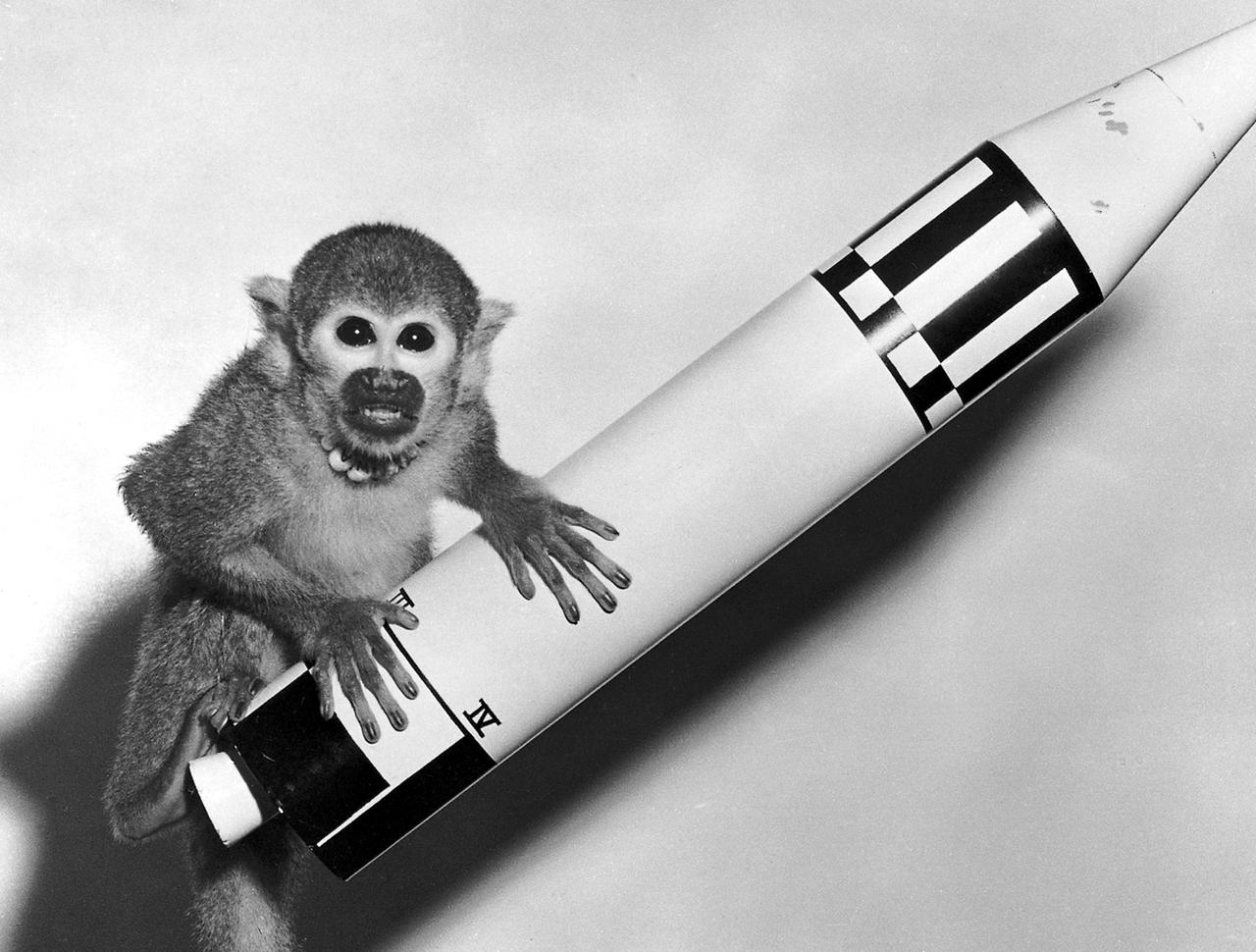
Space monkeys. Adorable, right? These little primates have travelled to space since 1949 as proxies for human astronauts. Without the risk of losing human life, the impact of launches on biological functions became measurable by scientists with the use of monkeys. However, questions about the ethical treatment of animals in launches quickly arose, officially becoming a major issue in 1957. Fortunately, today’s technology makes animal space missions safer.
Albert II was the first monkey to ever reach space. On his V-2 mission, launched from White Sands, New Mexico, Albert faced zero threats to his illness on his whole flight. However, as his spacecraft landed, the impact ended his life.
Many other missions with many different monkeys followed Albert II’s death. Monkeys aren’t the only kind of animal launched into space, however. Dogs, cats, tortoises, mice, rats, rabbits, fish, frogs, spiders, insects, and quail eggs have all been launched to space as of 2026.
As great at these missions are, it’s not likely that many more monkey-crewwed space flights will happen. But as we look into the future, we will remember the animals that helped us along the way.
Works Cited
“A Brief History of Animals in Space.” NASA, National Aeronautics and Space Administration, https://www.nasa.gov/history/a-brief-history-of-animals-in-space/. Accessed 27 May 2026.
Wall, Mike. “Monkeys in Space: A Brief Spaceflight History.” Space.com, 28 Jan. 2013, https://www.space.com/19505-space-monkeys-chimps-history.html. Accessed 27 May 2026.
Brennan, Anna Marie. “We’ve Been Sending Animals Into Space for 7 Decades—Yet There Are Still No Rules to Protect Them from Harm.” Phys.org, 20 Aug. 2025, https://phys.org/news/2025-08-weve-animals-space-decades.html. Accessed 27 May 20