Bimetallic 3D-Printing Strategies for Liquid-Engine Combustion Chambers

Introduction

In this research project, I simulated the conditions of combustion on a liquid-engine combustion chamber across 10 different printing precisions. This is the question I was exploring:

How do multi-laser layouts in Selective Laser Sintering (SLS) 3D printing affect the structural integrity of liquid engine combustion chambers?

I knew that combustion chambers are composed of an inner lining and an outer jacket. These two layers acted differently. Printing precision on chambers with more complex designs, as well as multiple materials, can be important for the structural integrity and thermal durability of the combustion chamber. 

Methodology

To determine the effect of printer precision on the thermal durability of a combustion chambers, two key variables were taken under consideration: 

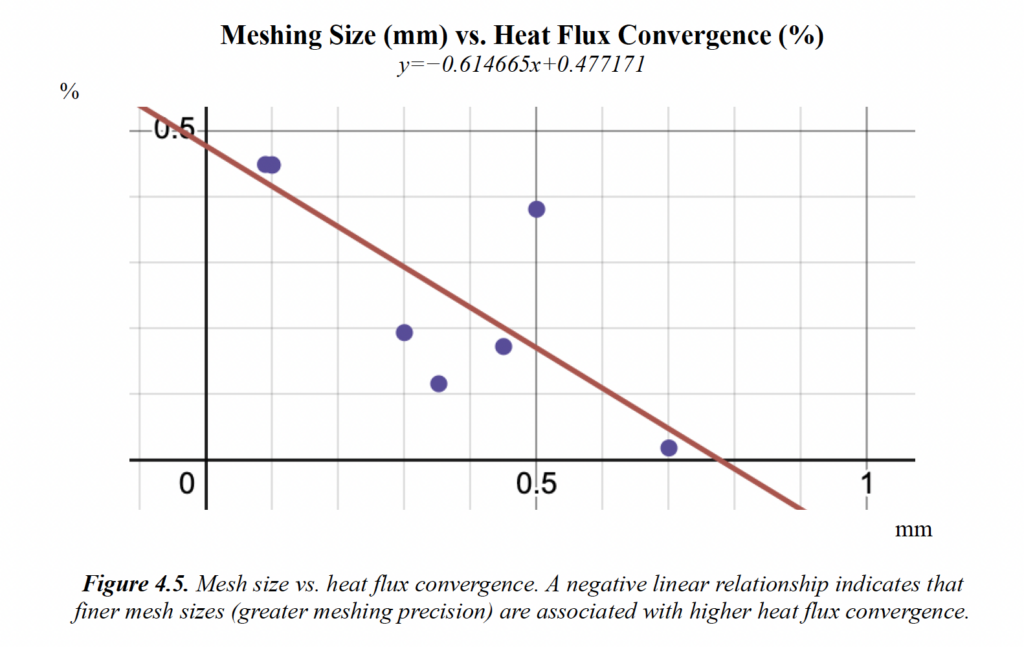
INDEPENDENT VARIABLE: Mesh width in mm (represents a printer’s precision)

DEPENDENT VARIABLE: Heat Flux Convergence % (represents the chamber’s durability post-exposure to combustion)

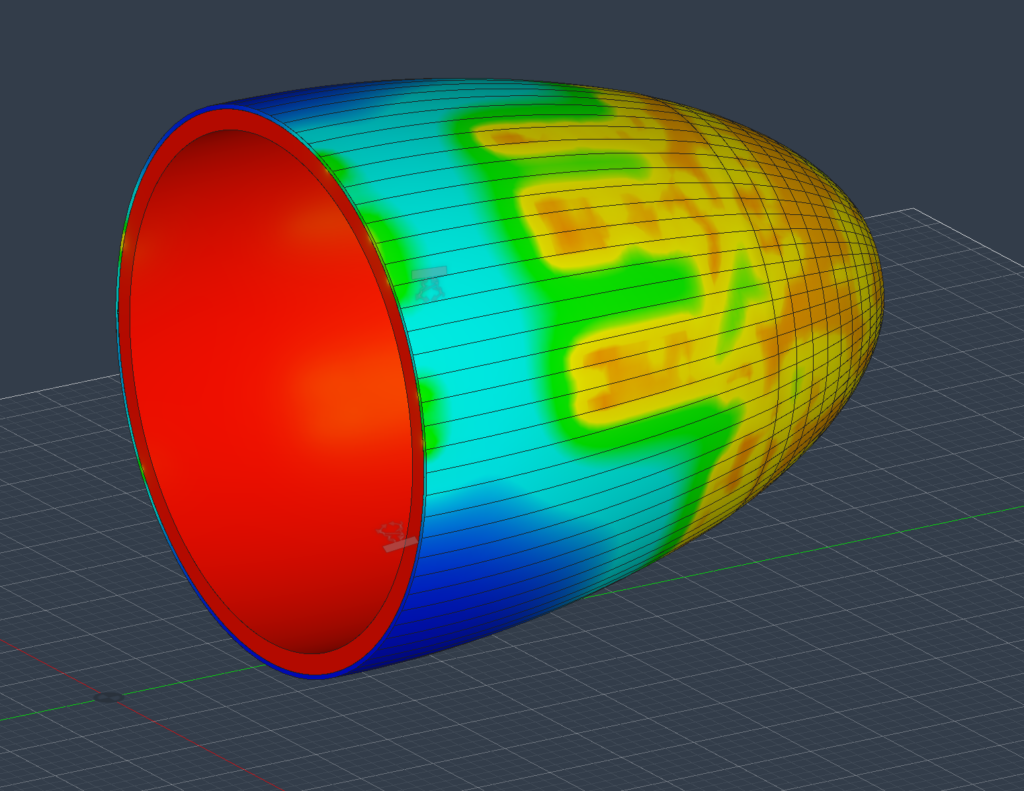
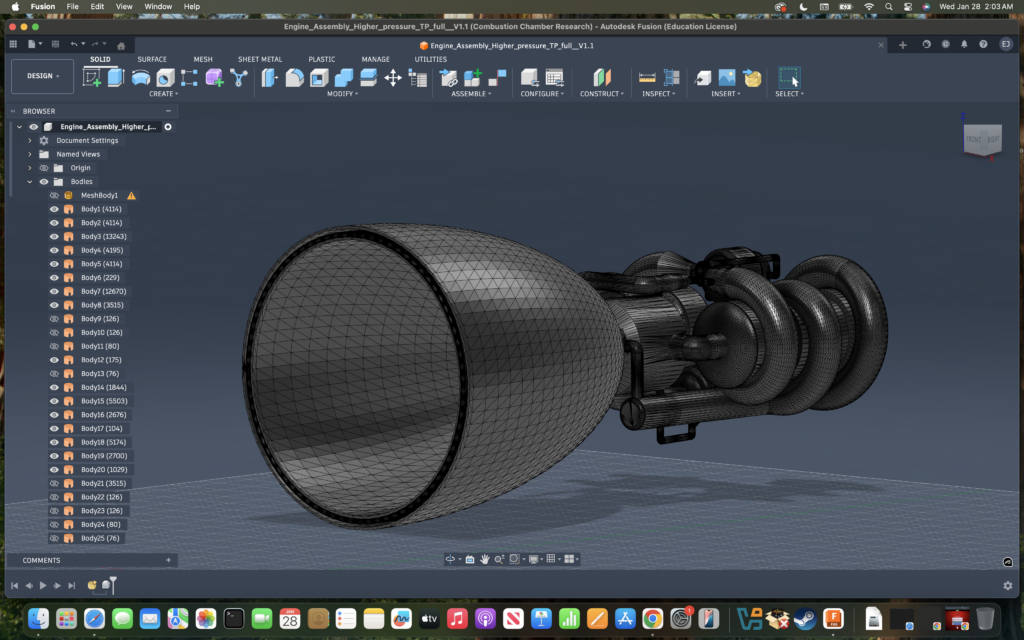
The effects of combustion were simulated in Fusion 360 with radiation and convection loads. 

The complex model used was sourced from @Tommy99osullivan in creative commons.
Conclusions

There was a significant causal relationship (R2 = 0.767%) between the precision of an SLS and the finished liquid-engine chamber thermal durability.

3D printers with a higher precision fabricated more durable chambers.